



Table of Contents
In today’s rapidly shifting professional landscape, leaders face a unique challenge: how to make wise long-term decisions while navigating unprecedented levels of change. This requires a form of leadership that blends rational analysis with emotional insight, clarity with adaptability, and planning with authenticity.
To meet the moment, leaders must embrace strategic decision making as a core competency—an approach that balances intellect, instinct, and integrity.
Below are seven foundational principles that elevate leadership from reactive to strategic, and from positional to authentic.
1. The Role of Strategic Thinking in Leadership Decisions

Before making important choices, top professionals engage both hemispheres of the brain. This means using logic to evaluate information while allowing instinct and emotion to contribute to the picture.
A leader who claims to “leave emotions out” of their thinking misses a vital reality: emotions carry valuable data. They influence perception, motivation, and risk assessment. The art lies in integrating emotional awareness—not suppressing it. Be careful from bias in the emotions, this can completely derail the decision making process.
True pros also know when to “sleep on it.” Time enables the mind to connect facts, foresee consequences, and anticipate long-term impacts. This is where strategic decision making begins: by projecting into the future before it arrives, identifying outcomes, and mapping the consequences of all available choices.
The more you invested yourself in the decision making process the easier it is to project ahead because now you are projecting with conviction and certainty which is extremely fortifying and potentizing the future before you get there.
2. Understanding Change: The Leader’s New Reality
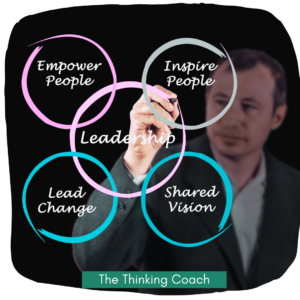
Change today is relentless, accelerating, and often disruptive. It reshapes how people think, feel, and behave in profound ways. These emotional shifts influence motivation, morale, and overall stability. Leaders must understand that change management is not optional—it’s foundational to strategic decision making because every major choice is made inside an environment where circumstances evolve quickly.
When leaders recognize the emotional impact of external and internal change, they become far better equipped to guide individuals and teams through uncertainty with clarity and confidence.
3. Becoming a Change-Ready Leader – A Situational Leader

A leader who insists on predictability will struggle. A leader who grows comfortable with uncertainty will thrive.
To be effective, leaders must update their assumptions “on the run,” and welcome new information without fear. Becoming a change agent means staring turbulence in the eye without flinching, and without losing emotional stability. It means being flexible, adopting to emerging needs and being courageous to do things differently while not using “yesterday” as your bench mark.
Handled well, change becomes:
- A vehicle for innovation
- A catalyst for opportunity
- A springboard for new directions
When a leader manages change instead of being managed by it, confidence takes root, and the entire workforce benefits.
This is the foundation upon which strategic decision making is strengthened.
4. Leading by Example: The Core of Authentic Leadership

Authentic Leadership means embodying the same values you teach. It is the ability to live in alignment with your principles, to do what you say, and to say what you do. This level of integrity directly strengthens strategic decision making, because people naturally trust and follow leaders whose behavior consistently reflects their commitments.
Leading “by example” expresses itself in subtle but powerful ways:
- Not allowing a gap between what you say and what you do
- Keeping promises down to the smallest details
- Upholding commitments even under pressure
- Communicating with clarity and specificity
- Demonstrating the behaviors you expect from others
- Honoring time sensitive commitments
For instance, saying “I’ll call you later” is not enough. Authenticity demands specificity—and follow-through. If something changes and a promise cannot be met, the leader informs the individual before the agreed-upon time, never after.
These seemingly small actions build profound trust. They reinforce credibility, stabilize morale, and define the leader’s character far more than eloquence alone ever could.
This is easily accomplished with basic training and repetition.
5. How Strategic Decision Making Shapes Communication During Change
 How Strategic Decision Making Intersects with Communication
One of the pillars of effective leadership is transparent, skillful communication. In times of change, people need clarity more than ever. They need to feel seen, understood, and included.
Strategic Communication involves:
- Understanding the emotional impact of your words
- Anticipating the response of the audience
- Addressing concerns before they grow
- Delivering information in a way that builds trust
- Communicating with empathy
In today’s world, nothing stays hidden for long. Information spreads quickly. Misunderstandings escalate instantly. Leaders must therefore communicate with honesty, foresight, and intention.
When communication is strategic, people feel cared for—and productivity, morale, and cooperation rise…just because they know where they are!
6. The Power of Admitting Mistakes

Admitting mistakes is one of the greatest leadership strengths. This humane vulnerability builds trust. It demonstrates humility. It signals emotional maturity.
Leaders who conceal mistakes pay a far higher price in the long run than those who acknowledge them. Deception erodes trust, weakens morale, and damages the human fabric of the organization.
People forgive mistakes.
They rarely forgive deliberate deception.
A leader who can say “I was wrong” becomes more credible, not less. Even if there are short-term consequences, the long-term result is stronger leadership stature and deeper trust.
This level of honesty reinforces the integrity behind strategic decision making and sets an example for the entire organization.
7. Self-Reflection: The Authentic Leader’s Safety Net

Self-reflection is an essential discipline for every leader. It serves as an internal compass that keeps judgment aligned, ego in check, and perspective clear. This inward practice fortifies strategic decision making because it ensures choices arise from awareness, honesty, and personal responsibility—not habit, insecurity, or past success.
Consider these introspective questions as your personal leadership audit:
- What leadership strengths would others genuinely confirm about you?
- Are your skills evolving continuously?
- Are you open to change—or imprisoned by past successes?
- Do you think creatively and critically?
- Do you have the courage to lead change even at personal cost?
- Do you hide behind eloquence?
- Do you keep people “in the dark” to remain in control?
- Is Emotional Intelligence part of your leadership toolkit?
- Do you listen deeply and actively to others?
- Do you inspire trust?
- Do you truly believe in people?
- Do you lead by example?
- When was the last time you requested honest feedback from your employees?
These questions protect leaders from the most destructive leadership trap: the ego.
An unchecked ego blinds perspective, weakens influence, and halts progress—while humility, reflection, and honesty elevate leadership into its highest form.
If your organization is ready to strengthen leadership effectiveness, embrace change with confidence, and elevate decision quality across all levels, invite Eli Harari to your next keynote, seminar, or leadership workshop.

Eli Harari
The Life Coach for Professionals™